Designing a garden is not just about choosing furniture and a few plants from the garden center. The soil, exposure, local water regime, and regulatory constraints related to drought condition every planting and surfacing decision. We will discuss here the technical points that make the difference between a sustainable outdoor layout and a project that needs to be redone in three years.
Soil and drainage: the diagnosis that no one makes before planting
A percolation test takes less than an hour and guides the rest of the project. Dig a hole 30 cm deep, fill it with water, and time how long it takes to drain. If the water stands for more than four hours, you are on compact clay soil. Planting a Mediterranean bed on this type of land without a French drain or without raising the flower beds condemns the plants to root asphyxiation.
A clay soil requires structural amendment, not just a simple addition of potting soil. Coarse sand, mature compost, and pozzolana mixed into the top 40 centimeters change the grain size and allow the roots to breathe. On sandy soil, it’s the opposite: water retention is low, and thick mulching (wood chips, miscanthus, hemp) becomes non-negotiable to retain moisture.
We recommend mapping the shaded areas over four time slots (8 AM, 12 PM, 4 PM, 6 PM) before positioning any beds. This mapping avoids classic mistakes: a scorched hydrangea in full sun or a leggy rose under a north wall. To discover Jardins & Paysages online, industry professionals detail this type of preliminary diagnosis with sheets tailored to different regional contexts.
Water restrictions and garden layout: anticipate rather than suffer
Prefectural water restriction orders are no longer exceptional events. For several consecutive summers, the majority of French departments have experienced levels of vigilance, alert, heightened alert, or even crisis. In heightened alert, watering of lawns and ornamental beds is prohibited from 8 AM to 8 PM. In a crisis situation, ornamental watering is almost completely banned.
Failure to comply with these orders results in a fifth-class offense. The fine can reach 1,500 euros for an individual, increased to 3,000 euros in case of repeat offense. These sanctions are not theoretical: inspections are increasing, especially in areas with recurring water stress.
Water-wise plants: beyond lavender
The standard response to drought often boils down to lavender, rosemary, and a few grasses. This approach produces monotonous gardens. We are seeing a growing interest in lesser-known but equally resilient Mediterranean plants:
- The teucrium fruticans (bush germander), evergreen, gray-blue, which tolerates poor calcareous soils and requires no watering once established
- The euphorbia characias, graphic, tolerant of extreme dryness, which structures a bed without maintenance
- The perovskia (Russian sage), whose blue-purple blooms in late summer fill the gap left by classic perennials that have already faded
- The achilleas in horticultural varieties (sulfur yellow, salmon pink, brick red), effective ground covers that advantageously replace a lawn on slopes
The vegetable garden remains a priority in the orders: even in a crisis situation, food watering benefits from regulated exemptions. Integrating a vegetable patch into the layout is therefore not just an aesthetic choice; it is also a strategy to maintain an allowed use of water.
Surfaces and terrace: balancing permeability and comfort
The choice of outdoor flooring engages the garden for several decades. Two criteria take precedence over aesthetics: permeability and thermal behavior in summer.
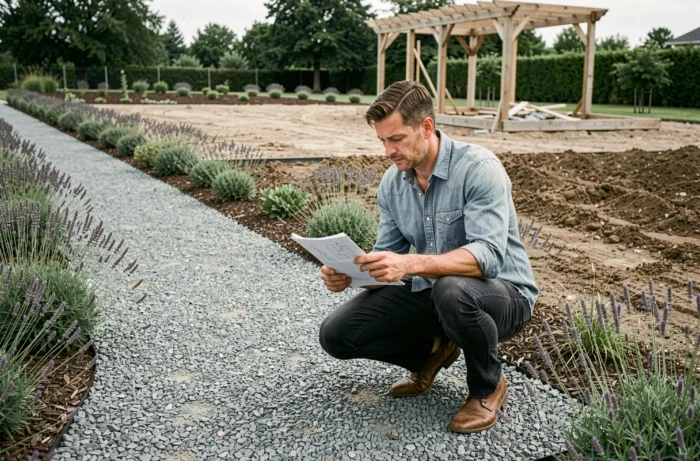
A classic concrete slab impermeabilizes the soil and concentrates runoff towards the low points of the land. On clay plots, this exacerbates the drainage problems mentioned earlier. Permeable alternatives (stabilized gravel, grassed cellular slabs, wide-joint pavers) allow water to infiltrate and reduce the heat island effect.
Composite wood has improved in quality, but we find that budget boards swell and warp after two winters. A quality composite is distinguished by its proportion of wood fibers (ideally around half of the mix) and by a co-extruded treatment that protects the core of the board.
Natural stone versus ceramic stoneware
Natural stone (travertine, quartzite, slate) ages better than ceramic stoneware outdoors. Large-format ceramic stoneware poses a thermal expansion problem on pedestals: the joints close in summer and the boards can lift. A layout with expansion joints every 3 linear meters limits this risk, but many installers are unaware of it.
Natural stone is more expensive to purchase. Over a lifespan of twenty years, its overall cost becomes comparable, or even lower, if one includes the partial replacement of cracked or discolored ceramic boards.
Structuring outdoor space with vegetation rather than fences
Monospecific hedges of thuja or cherry laurels create an opaque wall that darkens the garden and impoverishes biodiversity. A free hedge composed of five to seven different species filters the wind, offers staggered blooms, and attracts garden auxiliaries.
Tall grasses (miscanthus sinensis, panicum virgatum) form effective seasonal screens. They reach their full height in summer, when privacy is sought, and then are cut back in late winter to let in light. This natural rhythm aligns better with the actual use of the garden than a persistent hedge trimmed three times a year.
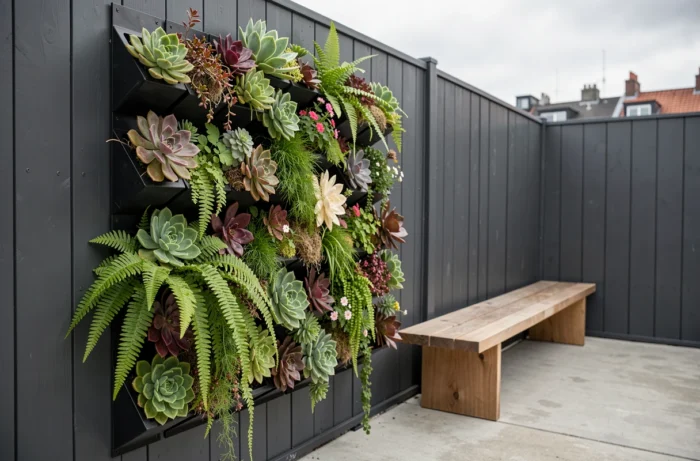
For small spaces, trellising planted with climbers (star jasmine, trachelospermum jasminoides, clematis armandii) verticalizes the decor without taking up ground space. A green wall created this way transforms an awkward view into a scenic backdrop.
The design of a sustainable garden relies on technical choices made in advance, not on impulsive purchases at the garden center. Soil diagnosis, sunlight mapping, anticipation of water restrictions, and selection of permeable surfaces form the foundation. Plants and furniture come afterward, once the structure is established.