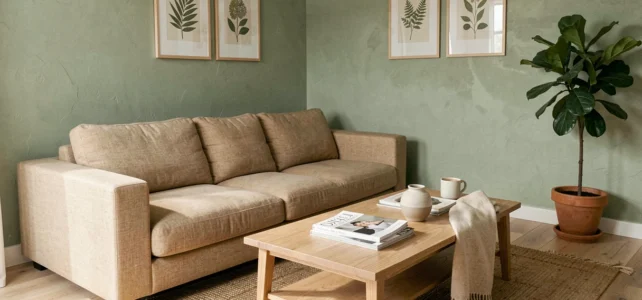
Transforming an interior doesn’t always start with a desire for aesthetic change. Often, it’s a daily dysfunction that triggers the reflection: a hallway where two people can’t pass each other, a living room that is dark at 3 PM, a piece of furniture blocking access to the balcony.
Online decor content is full of visual ideas, color palettes, and furniture selections. The real question arises beforehand: when should one move beyond inspiration to conduct a concrete diagnosis of their space?
Usage Diagnosis Before Decor Project: Circulation, Light, and Proportions
Most home sections offer photo galleries categorized by style or room. This format helps to visualize, but it sidesteps a common problem: making decor choices based solely on aesthetics generates usability errors. An imposing corner sofa in a modestly proportioned living room reduces the passage area. Dark wallpaper in a north-facing room accentuates the lack of natural light.
Before consulting inspirations, three parameters deserve precise measurement:
- Daily circulation: mapping out recurring movements (kitchen to table, entrance to storage, bedroom to bathroom) helps identify bottlenecks and dead zones.
- Natural light by time slot: a room that receives sunlight in the morning but none in the afternoon cannot support the same shades or layout as a space bathed in light all day.
- Actual proportions, measured at floor level and ceiling height: a 2.50 m wall does not highlight the same elements as a 3.20 m wall.
This preparatory work transforms the search for ideas into an effective filter. Instead of saving dozens of images, one selects only those that correspond to their actual constraints. Articles published in Scoopzilla’s home section address these themes by combining visual inspiration with practical layout questions.

When Decor Inspiration Is No Longer Enough: Warning Signs
Collecting decor ideas on online platforms remains a useful step, but it can also mask a deeper need to rethink the layout. Several signals indicate that it’s no longer just about changing a wall color or replacing a light fixture.
A space that feels exhausting daily signals a layout problem, not a decor issue. If tidying up after each meal takes an excessive amount of time, it’s the distance between the table and storage that is problematic, not the style of the furniture. If artificial light stays on during the day, it’s the orientation of the furniture relative to the windows that needs to be reconsidered.
The “room by room” logic found in several home media has its limits. It treats each space as an isolated compartment. In practice, an apartment or house functions as a circuit. Modifying the living room without considering the adjacent entrance or kitchen creates flow inconsistencies. Field feedback varies on this point: some decorators favor a holistic approach, while others believe that addressing a single room is enough to revive the dynamics of a home.
Three Questions to Ask Before Any Change
Rather than a list of tips, a quick self-diagnosis helps to pinpoint one’s real need. What route do you take most often in your home, and is that route smooth? Which room do you avoid, and why? Which piece of furniture hasn’t moved since you moved in, even though your habits have changed?
These questions guide towards a usage diagnosis rather than a simple makeover. They help distinguish what pertains to taste (which can be resolved through inspiration) from what pertains to functionality (which requires a structured action plan).
Digital Tools to Test a Layout Before Renovation
3D modeling apps accessible on smartphones have changed the way to prepare an interior project. Importing a photo of your room and testing several configurations before any purchase reduces the risk of error. Some services allow you to visualize a piece of furniture at real scale using augmented reality.
3D does not replace physical measurement. A digital rendering can beautify proportions or alter the perception of brightness. The available data do not conclude that these tools completely eliminate unpleasant surprises, but they provide an additional filter between the idea and realization.
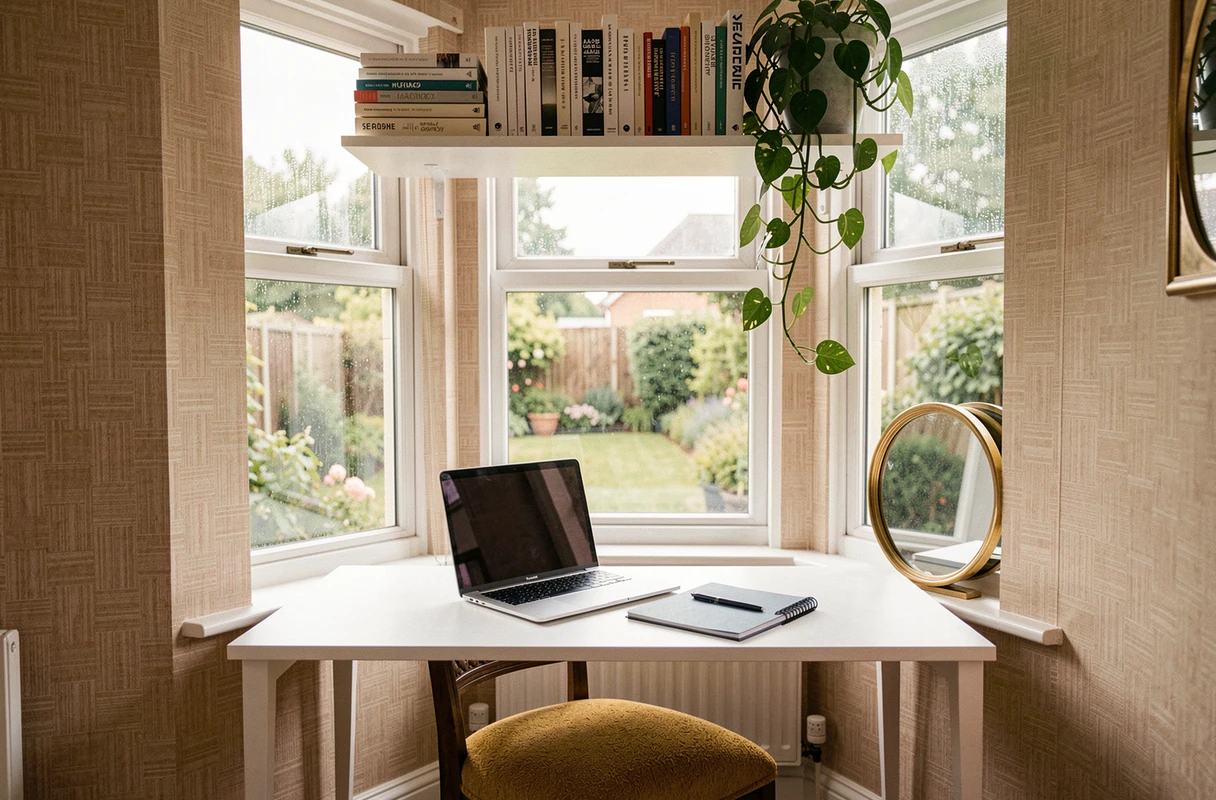
The arrival of artificial intelligence in interior design adds another layer: some platforms offer to reimagine a room based on a simple photo by applying a predefined style. The result is visually appealing. However, these AI renderings do not take into account technical constraints (the load-bearing capacity of a partition, the location of water inlets, electrical standards). They remain tools for inspiration, not prescription.
Maintenance and Durability: The Overlooked Criterion in Decor Choices
An aspect rarely addressed in inspiration content concerns medium-term maintenance. The choice of a covering, textile, or countertop material commits for several years. A polished concrete floor photographed in a Parisian loft does not age the same way in a home with children and pets.
Maintenance conditions the actual durability of a decor choice. A wall painted in a dark shade reveals every fingerprint. A light-colored fabric sofa without stain treatment loses its luster in a few months. These parameters are almost never included in inspiration galleries, which show interiors at the moment of the photo shoot, never six months later.
Integrating the question of maintenance from the inspiration phase avoids disappointments. This requires cross-referencing sources: consulting not only home sections for ideas but also user feedback on the longevity of the chosen materials.
The transition from inspiration to the concrete transformation of an interior relies on this shift: stop searching for what pleases and start verifying what works. The beauty of a layout is also measured by its ability to withstand daily life without additional effort.