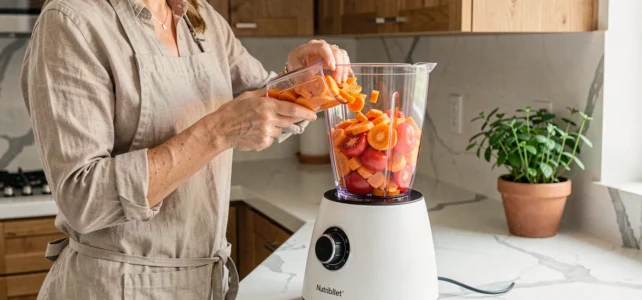
We take the leeks out of the fridge, cut two carrots into rounds, throw everything into the NutriBullet bowl with a bit of water, and start the soup program. Twenty minutes later, the question arises: does the result really compare to a velouté prepared in a pot with an immersion blender?
Vented lid and hot liquids: what the NutriBullet handles (and doesn’t)
Not all NutriBullets are created equal when it comes to hot soup. Personal models (individual cups with screw tops) are not designed for hot liquids. The pressure from steam in a tightly sealed container can cause hot contents to splatter upon opening.
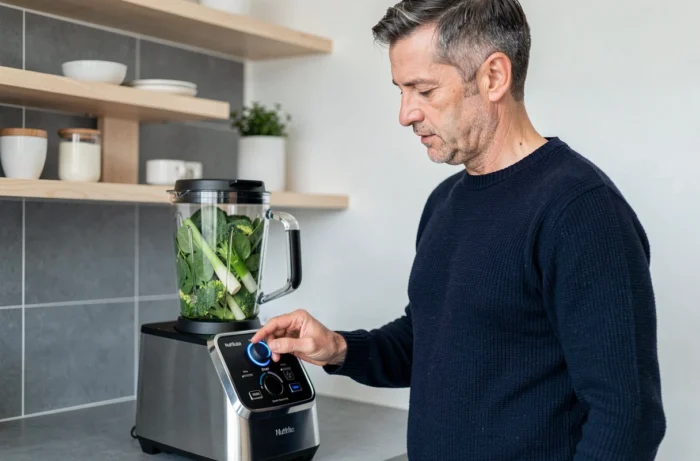
So-called “full size” models, like the Power Core, SmartSense, or Blender Combo, feature a vented lid compatible with hot soups. This ventilation allows steam to escape during blending without creating pressure buildup. This mention of “vented lid safe for hot soups” can also be found on recent product sheets, a criterion that has become central in buying guides since 2024-2025.
Before considering using a heating NutriBullet for soup, one should check the exact model. Blending pre-cooked and warm vegetables in a personal NutriBullet is still feasible by filling the bowl to a maximum of two-thirds and allowing the preparation to cool. However, for truly hot soup blended at high temperature, only models with a vented bowl are intended for this use.
Texture of soups in the NutriBullet: smooth velouté or grainy result
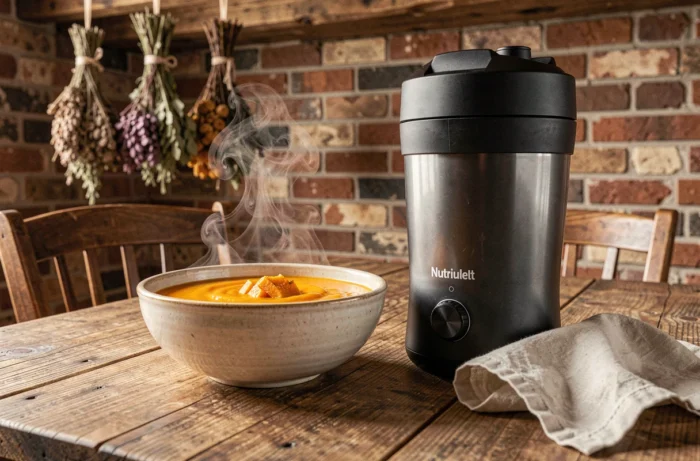
On this point, the NutriBullet delivers on its promises. Its stainless steel blades and powerful motor produce a velouté of a fineness that is hard to achieve with a standard blender. The fibers of leeks, the thin skin of zucchinis, or pieces of butternut squash are turned into a homogeneous puree in just a few seconds.
The difference is especially noticeable with fibrous vegetables. A celeriac velouté or parsnip soup, which can sometimes remain grainy with an immersion blender, comes out smooth and silky from the NutriBullet. The texture is comparable to that of a high-end blender like Vitamix, but at a significantly lower cost.
Limitations on chunks
However, if one is looking for a rustic soup with chunks of vegetables, the NutriBullet is not the right tool. It blends everything, and very finely. There is no “controlled pulse” program on most models that would allow for a coarser texture. For a minestrone or a country soup, it’s better to use a pot and a wooden spoon.
Heating NutriBullet vs. Moulinex heating blender: two different approaches
We are often asked about the comparison with heating blenders like the Moulinex Easy Soup or similar. The two devices approach soup in different ways.
The Moulinex heating blender cooks raw vegetables directly in the bowl thanks to an integrated heating element, then blends them. You add the ingredients, press a button, and wait. The heating NutriBullet follows the same logic on its models equipped with a heating function, but the bowl capacity is generally smaller.
- The bowl of a dedicated heating blender often exceeds one liter, allowing for three to four servings at once. The NutriBullet is more suited for individual portions or for two people.
- Cooking time varies: a standard heating blender takes about twenty minutes to cook raw vegetables, while the NutriBullet can be quicker with pre-cooked or tender vegetables.
- Cleaning also differs: NutriBullet cups often go in the dishwasher, which is not always the case for the bowls of heating blenders with integrated heating elements.
The choice depends on the desired soup volume and the available space in the kitchen. For a single person or a couple, the NutriBullet meets the need. For a family, a device with a larger bowl will be more practical.
Concrete risks for the motor: what user feedback reveals
A point rarely addressed in promotional content concerns the durability of the motor against hot preparations. Users report that hot liquid, when it exceeds the maximum fill line, can seep through the blade shaft and leak into the motor block.
The characteristic sign: a sizzling or irregular noise after a few uses with overly hot soups and an overfilled bowl. The repeated presence of liquid in the shaft causes corrosion of the motor windings, a failure that cannot be repaired by the user. Feedback varies on this point depending on the models, but the precaution remains the same.
Rules to follow to preserve the device
- Never fill the bowl beyond two-thirds with hot liquid, even on compatible models.
- Let the soup cool for a few minutes before blending if using a model without a vented lid.
- Clean and dry the blade shaft after each hot preparation to avoid moisture buildup in the base.
- Regularly check the condition of the silicone seal around the blades, which degrades faster when in contact with heat.
Recipes suited for the NutriBullet: focus on tender vegetables
The NutriBullet gives its best results with vegetables that cook quickly and blend easily. Zucchini, carrots, pumpkin, and spinach are perfect candidates. They are pre-cooked by steaming or boiling, poured into the bowl with broth, and the result is a velouté ready in less than two minutes of blending.
Fresh ginger, a clove of garlic, or fresh cheese added during blending incorporate perfectly thanks to the power of the blades. For a cold gazpacho in summer, the device excels as well: ripe tomatoes, cucumber, bell pepper, a drizzle of olive oil, and you’re done without any heat-related risks.
The NutriBullet makes excellent soups, provided you choose the right model and respect its capacity and temperature limits. It is not a standalone cooker for four people, but an finishing tool that transforms pre-cooked vegetables into veloutés of remarkable quality. For those cooking in small quantities, it is a great alternative to a bulkier heating blender.