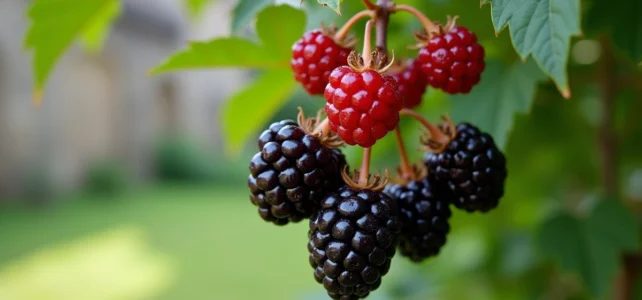
The fruit of the plane tree mulberry is edible, provided that the fruit-bearing tree is not confused with its sterile cousin. The distinction between Morus kagayamae (synonym Morus bombycis) and the cultivars of Morus alba selected to produce no fruit determines everything that follows: without correct identification of the tree, the question of consumption does not even arise.
Identifying a fruit-bearing plane tree mulberry before any harvesting
In urban areas, a large number of plane tree mulberries planted along streets or on terraces are sterile cultivars of Morus alba, fruitless variety. These specimens have been selected to provide shade without generating ground stains or attracting insects. We observe that this confusion is the primary source of disappointment for individuals hoping to harvest mulberries.
The fruit-bearing Morus kagayamae can be recognized by its broad, often lobed leaves, reminiscent of those of the plane tree, and especially by the presence of small inflorescences in spring that will produce fruit. A sterile mulberry simply does not produce any viable female flowers. If your tree has never borne fruit after several seasons, it is probably an ornamental cultivar.
Before considering any harvest, confirm that the fruit of the plane tree mulberry is indeed edible for your specific variety. A plane tree mulberry purchased at a garden center labeled “parasol” or “fruitless” will yield nothing edible.
Maturity of the fruit and harvesting window for plane tree mulberries
The mulberries of the plane tree mulberry change from green to red, then to purplish black at full maturity. Only this last stage guarantees a satisfying taste. A fruit that is still red will be sour and astringent, lacking in flavor.
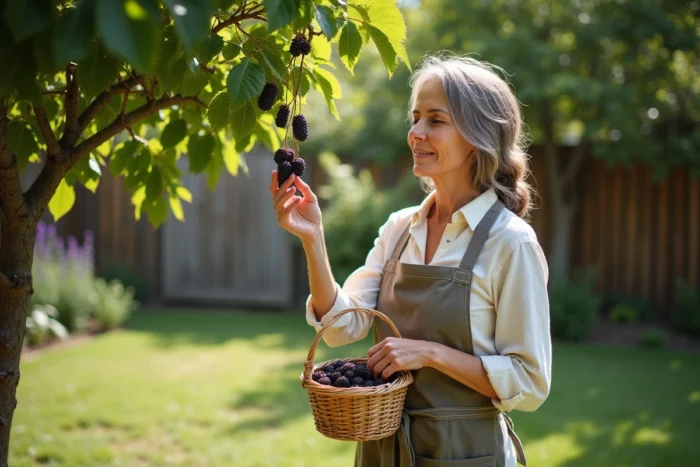
The mulberry is ready when it detaches at the slightest touch. We recommend placing a clean sheet or tarp under the tree and gently shaking the branches: the ripe fruits fall on their own, while the others remain attached. This method prevents crushing the mulberries between fingers and minimizes losses.
The harvesting window lasts a few weeks in summer, depending on the local climate. The fruit does not keep for more than a day or two after harvesting: it crushes, oozes, and ferments quickly. Any harvest should be followed by immediate washing and quick consumption or processing (jam, coulis, freezing).
Taste and texture at maturity
The mulberry of the plane tree mulberry offers a sweet, slightly tangy flavor, similar to blackberry but with a juicier texture and fewer seeds. The flesh is fragile and permanently stains fingers, clothing, and surfaces. This last point explains why so many municipalities prefer sterile cultivars.
Health precautions for consuming plane tree mulberry fruits
The botanical edibility of a fruit does not exempt from health precautions. Mulberries harvested from a garden or in semi-urban areas may be contaminated by pathogens present in the environment.
- Harvest more than one meter off the ground to limit contact with droppings from foxes, dogs, or cats, potential vectors of alveolar echinococcosis, a rare but serious parasitosis
- Thoroughly wash each fruit with clear water before consumption, even if the tree is in your own garden, to eliminate dust residues and microorganisms
- Do not consume fruits collected from the ground for several hours, as fermentation and bacterial development are rapid on such fragile fruit
- Avoid harvesting from trees located near roadsides or in immediate proximity to areas treated with pesticides
These rules apply to any outdoor fruit harvesting and are not specific to the plane tree mulberry, but the fragility of its mulberries makes washing and sorting even more necessary.
Culinary uses and preservation of Morus kagayamae mulberries
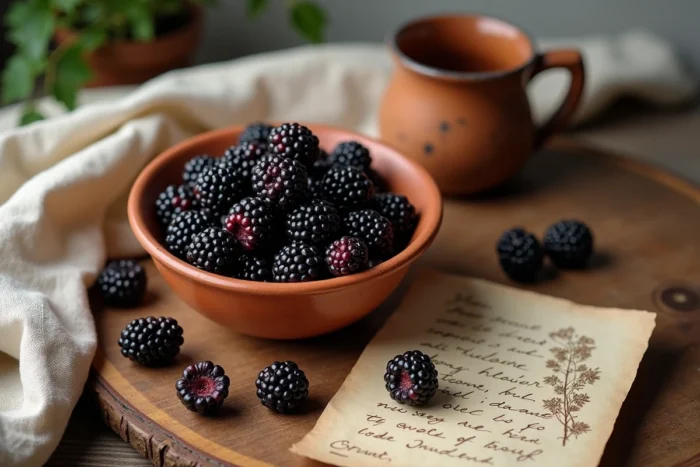
The mulberry of the plane tree mulberry does not handle transport and storage at room temperature well. Processing on the same day remains the best option. In jam, the fruit yields a deep purple result, with a taste reminiscent of wild blackberry but sweeter.
Freezing and cooking
Freezing works well provided that the fruits are spread out on a tray before being bagged, to prevent them from forming a compact block. After thawing, the texture will be softer, which is perfect for a coulis or compote, but less so for a pie where whole fruits are desired.
When cooked, the mulberries release a lot of juice. For jam, we recommend adding sugar gradually and cooking over moderate heat. A fruit rich in pectin like apple can be added to improve the setting if the consistency remains too liquid.
Leaves of the plane tree mulberry
The leaves of Morus are also used, particularly in herbal tea in certain traditions. They also serve as food for tortoises, a well-documented use among breeders. The leaf of the plane tree mulberry thus stands out from mere pruning waste.
Contraindications and side effects to watch for
The mulberries of the plane tree mulberry do not present any known toxicity in healthy adults. An unwashed fruit or one consumed before maturity can cause digestive disturbances. Individuals on anticoagulant treatment or suffering from kidney disorders should seek medical advice before consuming mulberries in quantity, as with any fruit rich in active compounds.
Young children should be supervised: the fruit stains, and its small size may trigger a picking reflex from the ground, where the parasitic risk is highest. The rule of harvesting above one meter takes on full meaning here.
The fruit-bearing plane tree mulberry offers a generous and flavorful harvest to those who can distinguish the right variety, respect the stage of maturity, and apply simple hygiene practices. The main trap remains confusing a sterile ornamental tree with a true Morus kagayamae, which turns anticipation into disappointment without any fruit to enjoy.