
Choosing a car involves technical trade-offs that cannot be resolved by simply reading product sheets. The total cost of ownership, recent tax constraints, and safety standards redefine selection criteria well beyond the catalog price. Understanding these parameters before entering a dealership helps avoid extra costs that may only become apparent months after signing.
Weight Tax 2026: The Tax That Changes the Choice of an SUV
Since 2026, the weight tax is triggered at 1,500 kg of curb weight, down from 1,600 kg the previous year. This lowered threshold directly affects compact SUVs, minivans, and most family cars equipped with a thermal or hybrid engine.
This tax accumulates with the CO₂ tax, and the overall cap now reaches 80,000 euros. In other words, a heavy and high-emission vehicle can generate a tax bill that represents a significant portion of the purchase price.
100% electric and hydrogen vehicles remain completely exempt from this weight tax. An automotive expert incorporates this data into their recommendation: between two models with comparable performance, the one that weighs under 1,500 kg saves several hundred euros in tax as soon as it is registered. Professionals listed on auto-concept.fr can detail these calculations based on the targeted model and chosen configuration.

Total Cost of Ownership: Beyond the Display Price
The catalog price represents only a fraction of the actual budget. The total cost of ownership adds up the purchase price, insurance, regular maintenance, and energy consumption over the expected holding period.
Increase in Car Insurance Premiums in 2026
Car insurance premiums increased by an average of 4 to 5% in 2026, with some profiles exceeding this level. A vehicle that is cheaper to purchase may turn out to be more expensive over five years if its insurance category is high or if its claims rate leads insurers to raise the premium.
Comparing insurance quotes before signing the order form allows for this item to be included in the decision-making process. A serious automotive expert provides an estimate of the total annual cost, not just the vehicle price.
Maintenance and Energy Based on the Engine Type
An electric motor has fewer wear parts than a thermal engine: no oil changes, no timing belt, brake pads used less frequently thanks to regenerative braking. The maintenance cost decreases significantly over time.
In contrast, replacing a high-voltage battery remains a cost to anticipate outside of warranty. For a hybrid engine, maintenance costs fall between those of a thermal engine and a pure electric one, with the mechanical complexity of both systems combined.
- Thermal vehicle: higher maintenance budget (oil changes, filters, timing belt), fuel indexed to oil prices
- Hybrid vehicle: intermediate maintenance, reduced consumption in the city, but dual engine to monitor
- Electric vehicle: reduced maintenance, lower cost per kilometer, caution regarding battery lifespan
GSR2 Safety Standards and Mandatory Equipment
The European regulation GSR2 has imposed new safety equipment on all new vehicles sold in the European Union since July 2024. Onboard black box, intelligent speed limiter, and rearview camera are now required devices.
For a recent used car purchase, checking for the presence of this equipment ensures that the vehicle meets the latest regulatory requirements. A used model from before this date may not have these features, which can influence its resale value in the medium term.
An automotive expert quickly identifies whether the examined vehicle includes these systems. This verification goes beyond simply reading the options label: some GSR2 equipment may be present but disabled by default in the vehicle’s software.
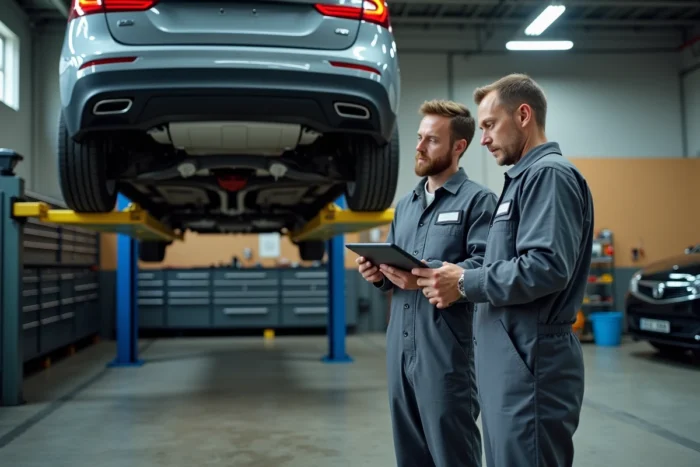
Support from a Professional: What Expertise Brings in Practice
Support from an automotive professional goes beyond advice on body color. An expert intervenes on three concrete axes that online research cannot replace.
- Analysis of technical history: reading the maintenance log, verifying actual mileage, detecting unreported repairs on a used vehicle
- Personalized financial simulation: calculating the total cost of ownership over the anticipated holding period, including taxes, insurance, maintenance, and depreciation
- Engine type orientation: decision-making between electric, hybrid, and thermal based on actual usage profile (annual mileage, home-work trips, access to a charging station)
In the used car market, contradictory expertise protects the buyer in case of hidden defects. The professional examines the vehicle according to a standardized protocol and produces an opposable report, which secures the transaction much more than a simple road test.
The choice of a vehicle in 2026 relies on fiscal, regulatory, and financial parameters that evolve each year. The lowered weight tax, the increase in insurance premiums, and GSR2 obligations change the balance between engine types and categories. Consulting a professional who tracks these developments daily remains the most reliable way to purchase a vehicle suited to one’s needs without unexpected budget surprises.