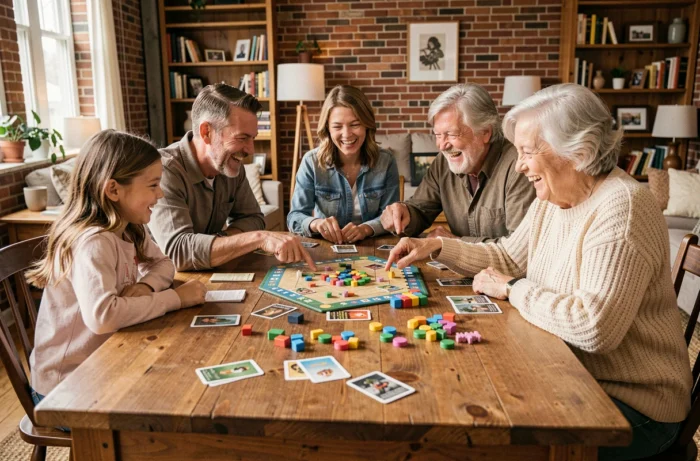
The leisure market in France no longer resembles what it was five years ago. Multi-activity indoor complexes are multiplying, and intergenerational formats are reshaping family outings. According to the first Family Travel Barometer published in September 2026, 60% of families use or wish to use generative AI to plan their outings and trips. This context profoundly alters what “having fun together” means in practice.
Intergenerational Leisure: Why the Multi-Activity Format is Taking Over
Family or friends outings often stumbled upon a simple problem: finding an activity suitable for all ages. Bowling appeals to adults, trampolining to children, and escape rooms to teenagers. As a result, each outing excluded part of the group.
Multi-activity indoor complexes address this constraint. Under one roof, they combine escape rooms, virtual reality, adventure courses, and spaces for younger children. The growth of these venues has been significant since 2019, particularly driven by indoor play parks and escape rooms. The principle is not the juxtaposition of independent activities, but the design of pathways where participants of different ages collaborate towards a common goal.
To find leisure offers available near you, whether for family outings or activities with friends, a quick search on www.maxiscoop.fr allows you to compare options by geographical area.
This intergenerational format changes the group’s dynamics. Grandparents, parents, and children share the same experience instead of dispersing into separate spaces. Feedback on the value for money of these complexes varies, but their increasing attendance shows that they meet a real demand.
Nature and Outdoor Activities: What Families Really Seek
Classic lists recommend hiking, biking, or picnicking. These suggestions remain valid, but they overlook a more structuring phenomenon: the rise of supervised nature sports accessible from a young age.
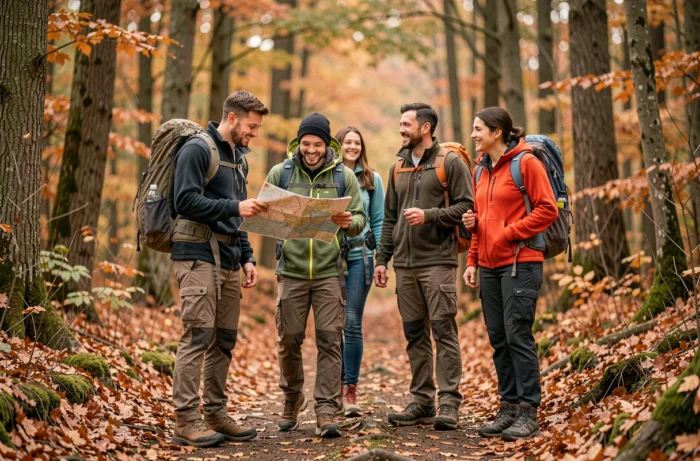
Archery, forest orienteering, canoeing on marked routes, geocaching with a mobile app: these activities combine moderate physical effort, technical learning, and collective play. They work equally well for a group of friends or a family with children aged six or seven and up.
- Geocaching transforms a simple walk into a geolocated treasure hunt, free and feasible anywhere in France, including urban areas.
- Marked orienteering courses by the ONF or local authorities offer a secure environment without reservation, with levels suitable for children.
- Supervised water activities (paddleboarding, canoeing) have become more accessible on inland waterways, not just along the coast.
The main advantage of these outdoor activities is their moderate cost compared to amusement park outings. For families who do not go on vacation (a significant proportion according to CREDOC surveys), local nature leisure activities often constitute the primary source of relaxation.
Escape Rooms and Virtual Reality: Leisure Activities Among Friends in Full Transformation
The escape room has experienced rapid expansion in France in recent years. The concept has evolved well beyond the locked room with a padlock. Some scenarios take place outdoors, others incorporate augmented reality elements, and mobile versions (escape rooms in a van, on a train) attract groups of friends seeking originality.
Immersive virtual reality represents the fastest-growing segment. VR centers offer collaborative experiences where a group of four to six players explores a virtual environment together. This format particularly appeals to outings among friends and events (bachelor parties, birthdays).
However, the accessibility of these activities for young children remains limited. Most virtual reality centers set a minimum age, and headsets are not always suitable for younger ones. For a family outing with children under ten, it’s best to check access conditions before booking.
The Trap of “All Digital”
A classic escape room, without screens, develops communication and group logic in a way that VR does not always replicate. Alternating digital activities and physical activities in the same afternoon offers a better balance, especially for family outings.
Creative and Cultural Workshops: Underestimated Leisure Ideas
Pottery, cooking, painting, or craft workshops do not top the searches for “family activities.” However, they deserve attention.
These formats share a common advantage: each participant leaves with a tangible object or memory. For children, making something with their hands has a different impact than an hour of trampolining. For adults among friends, a cooking or wine workshop creates a moment of conviviality more conducive to exchange than an intense sports activity.
- Pottery or ceramics workshops have multiplied in medium-sized cities, with subscription-free formulas suitable for groups.
- Group cooking classes (parent-child or among friends) offer sessions lasting two to three hours, often on weekends.
- Visit-workshops in museums, where materials are handled after a guided tour, combine culture and practice.
- Theater outings remain an accessible cultural option: attendance at French theaters shows a loyal and diverse audience.
The decisive criterion for choosing a workshop remains the size of the supervised group. A workshop limited to eight participants offers a radically different experience from a format with twenty-five people. Checking this point before booking avoids disappointments.
Leisure activities with family or friends are no longer just about choosing between “indoor” and “outdoor.” The real question concerns the format: collaborative or individual, digital or manual, supervised or free. Cross-referencing these criteria with the age of participants and the available budget yields more satisfying results than any generic list of outing ideas.