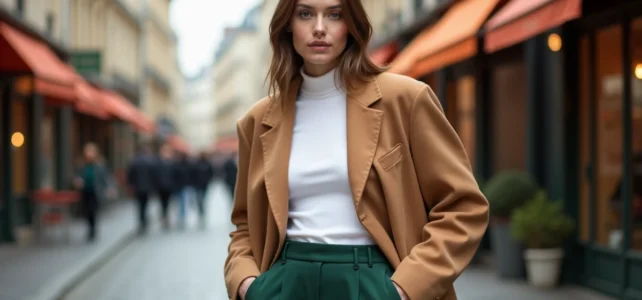
Each new season brings its share of pieces, cuts, and palettes that redefine silhouettes. The fashion trends of this season are not just a list of clothes to buy: they reflect a real change in approach, where controlled mixing replaces raw accumulation and where deep colors take over from the systematic black.
Miximalism: the fashion trend that replaces raw maximalism
Have you ever noticed those silhouettes that seem overloaded at first glance, but work perfectly? This principle has a name: miximalism. The idea is simple: we keep the visual richness of maximalism, but we calibrate it.
In practical terms, this means mixing different textures in the same outfit (linen and leather, knit and satin) while maintaining a coherence of colors. A telling example: a pleated satin skirt worn with a chunky knit sweater and smooth leather sneakers. Three materials, one chromatic direction.
This trend emerged in the Cruise and Pre-Fall collections, and it directly influences accessible ready-to-wear. The difference with classic maximalism lies in one principle: each added element must enhance the whole, not overload it. If you remove a piece and the outfit loses its interest, the balance is right. If it loses nothing, then there was one element too many.
To explore other interpretations of this type, the fashion articles on La Petite Emma regularly discuss these stylistic evolutions with concrete ideas for looks.
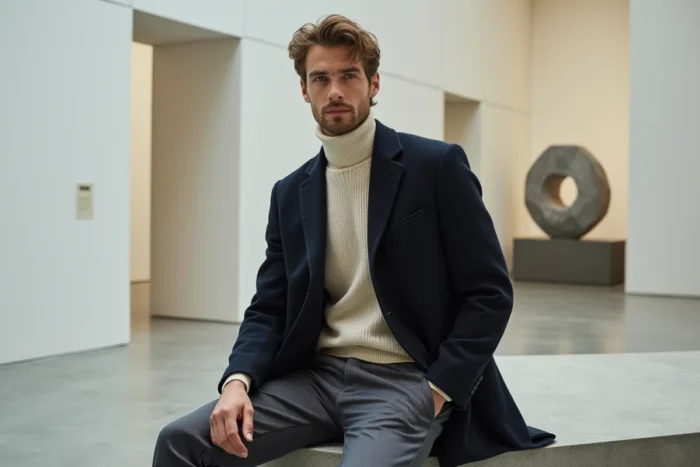
Bordeaux palette and earth tones: the colors dethroning black this season
Black remains a reflex. But for several consecutive seasons, bordeaux, wine, and earth tones have established themselves as true alternatives, not just passing fancies.
Why this choice? Because bordeaux offers the same depth as black with more character. It structures a silhouette without completely darkening it. Paired with beige, camel, or khaki, it creates a coherent autumn ensemble that does not depend on any strong piece to exist.
The adoption of these shades is not limited to coats or accessories. They can be found in everyday pieces:
- A colored jean in a faded bordeaux, worn as a basic instead of raw denim
- A flowy terracotta dress, neutral enough to transition from the office to an evening out
- Suede sneakers in tobacco or brick tones, replacing classic white models
The common point: these colors work together effortlessly. You can combine two earth pieces without risking a fashion faux pas, which is not the case with bright colors.
Structured cuts and relaxed tailoring: the style that transcends seasons
Tailoring returns every year in trend lists. What changes this season is how it is worn. We are moving away from the strict fitted blazer towards structured but relaxed cuts, worn casually.
Imagine a slightly oversized linen blazer, sleeves rolled up, worn over a simple t-shirt with wide jeans. The structure comes from the cut, not the rigidity of the fabric. It’s this contrast that gives style without making it feel like a costume.
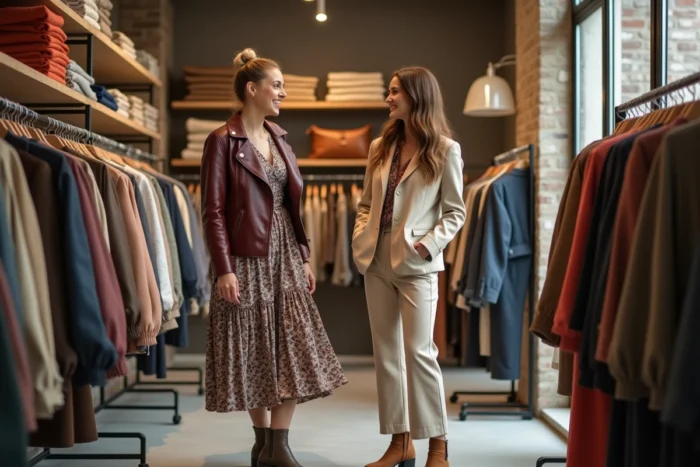
Tailoring pieces to prioritize
Not all tailoring pieces are equal for everyday use. Pleated trousers, for example, work better than classic suit pants because they tolerate more varied combinations (sneakers, flat sandals, ankle boots).
- The unstructured blazer in natural materials (linen, thick cotton) can be worn both closed and open
- Wide pleated trousers create volume below that balances a fitted top
- The short colored jacket adds a touch of tailoring without weighing down summer outfits
A good reflex: choose structured pieces in soft materials. The contrast between a sharp cut and a fluid drape gives that “styled without thinking” look that overly worked outfits never achieve.
Long dresses and skirts: adopting ample volumes without drowning in them
Ample volumes dominate collections this season, particularly in dresses and skirts. The challenge is not finding a long dress, but wearing it without it wearing the person.
The most reliable rule: one ample volume per outfit. If the skirt is long and flowy, the top remains fitted. If the dress is loose, we structure it with a belt or an accessory that defines the waist. This rule works regardless of body shape.
The pleated midi skirt, for example, creates movement without adding static volume. Worn with a tucked-in top and flat sandals, it elongates the silhouette. Worn with an oversized sweater and sneakers, it creates a heaviness that weighs down the look.
Materials to favor for long pieces
The choice of fabric is as important as the cut. A long dress in viscose drapes well and follows the body’s movement. The same cut in rigid polyester creates unsightly creases and a block silhouette. For skirts, crepe and lightweight cotton offer a natural drape that provides movement without rigidity.
Fine knit models also work very well in mid-season: they hug the silhouette while maintaining ease. The goal remains the same, regardless of the piece: the garment accompanies the body rather than masking it.
The common thread of this season can be summed up in one idea: style no longer comes from isolated spectacular pieces, but from the coherence between materials, proportions, and colors. An outfit constructed with three well-chosen pieces will always have more flair than an accumulation of trends worn without connection to each other.