A white wall, a bland hallway, an empty shelf waiting for months: we all know that corner of the house that lacks character. Instead of searching for the perfect decorative piece in stores, a few well-chosen DIY projects can transform a room into a warm and personalized space. All this without a huge budget, using materials often already available at home.
Sealing and DIY textiles: making a room cozy before decorating
We often think of wall decoration or accessories when we want to warm up an interior. The first thing to address is the physical sensation of cold. Since the rise in energy costs in 2022-2023, DIY projects focused on thermal comfort have multiplied, and they have a double advantage: they improve insulation while adding warm textures.
A homemade door draft stopper, for example, requires only thick fabric (linen, boiled wool) and reclaimed stuffing. Placed at the bottom of an entrance door or between two rooms, it cuts drafts and introduces a soft material into the visual field. One can also make insulating under rugs from old blankets cut to size, slipped under an existing rug.
Self-adhesive insulating films for single-glazed windows remain a cost-effective solution. Feedback on this varies depending on the type of window and exposure, but the draft-cutting effect is often noticeable from the first night. Combined with thick curtains sewn from reclaimed fabric, it creates a cozy atmosphere without touching the wall decor.
There are many ideas of this type on the home site of Les Bricoleries de Nanie, which gathers practical tutorials for this kind of accessible projects.
Natural materials in DIY: jute, rattan, and raw wood for an authentic atmosphere
The choice of material radically changes the outcome of a homemade project. A hand-sanded raw wood photo frame does not produce the same effect as a painted MDF frame. Natural fibers like jute, sisal, or rattan provide immediate visual warmth, and they can be easily worked without specialized tools.
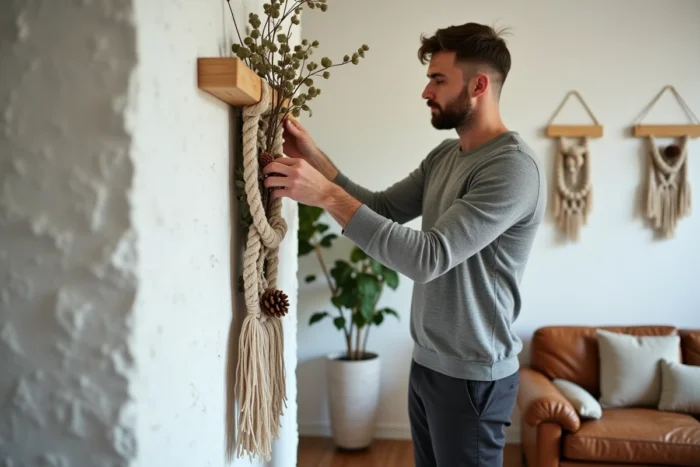
Woven jute rope baskets
You can make a storage basket with jute rope and a glue gun. The technique involves spiraling the rope to form the bottom, then building up the walls by layering the rows. The result serves both as storage and as a decorative element in an entryway or living room.
This type of basket is a great replacement for plastic bins. Placed next to a sofa, it holds throws or magazines. In a bathroom, it organizes towels while adding a natural touch.
Rattan or cane lampshades
Transforming a basic lampshade with natural cane requires little material: a pre-woven cane sheet, wood glue, and a pair of scissors. The cane is cut to the size of the existing lampshade and glued directly onto the structure. The light filtered through the cane creates a soft lighting that alters the atmosphere of an entire room.
Raw wood shelves
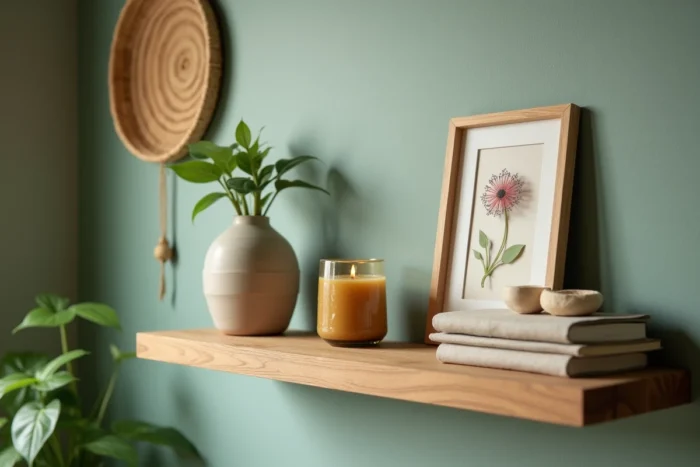
Untreated wood planks, sanded with fine grit and fixed with black metal brackets, form warm-looking wall shelves. The raw wood retains its grain and slight imperfections, which gives character to a bare wall. They can be waxed with beeswax for a satin finish without chemicals.
DIY projects with upcycling: jars, pallets, and fabric scraps
Upcycling remains the cornerstone of accessible home DIY. Before buying anything, take stock of what you already have: glass jars, fabric scraps, reclaimed pallets, old frames.
- Glass jars can be transformed into candle holders (a tealight, a bit of jute twine around the neck), vases for dried flowers, or pencil holders for a desk. A mismatched set of jars lined up on a raw wood shelf gives a distinct country style.
- Dismantled pallets provide usable planks for making a headboard, a small entry bench, or rustic photo frames. Pallet wood sands easily and takes stain or chalk paint well.
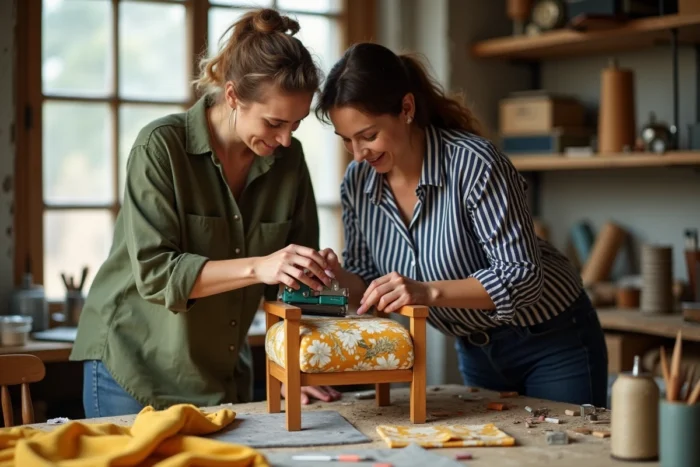
- Fabric scraps can be used to make mismatched cushions, placemats, or decorative bunting. Even without a sewing machine, fabric glue allows for simple pieces to be assembled.
- Old frames without glass can become supports for hanging photos with miniature clothespins and taut string, or decorative trays once the back is covered with fabric.
The idea is not to accumulate but to choose two or three projects that meet a real need: to organize, to illuminate, to dress a bare wall.
DIY wall decoration: photos, frames, and personalized compositions
A dressed wall changes the perception of a room. DIY wall compositions offer a personalization that mass-produced paintings do not allow.
A mixed frame wall works best when it mixes formats and contents: a black and white family photo, a small vintage mirror, a printed illustration, a brightly colored empty frame. The arrangement should appear spontaneous. To achieve this, first lay the frames on the floor, adjust the composition, then transfer the positions to the wall with masking tape.
Photo prints on thick paper, slipped into reclaimed frames, cost almost nothing and give a very personal result. You can also frame pages from old books, postcards, or fabric samples to vary visual textures.
DIY decor requires neither advanced skills nor a significant budget. What makes the difference is starting from a concrete problem (a bare wall, a cold room, a lack of storage) and choosing the right material. A few well-executed projects with natural materials will always have more impact than an accumulation of decorative objects with no connection to each other.